Water Resistance Explained: What Depth Ratings Really Mean
One of the questions we’re asked regularly at Bramlys is, “Can I swim in this?”.
It’s a simple question, but the answer isn’t always straightforward. Every watch has a water resistance rating – perhaps 30 metres, 50 metres, 100 metres or 300 metres – but these figures are often misunderstood. Many people understandably assume a watch rated to 30 metres can safely be worn 30 metres underwater, or that a 50-metre watch is perfectly suited to swimming.
In reality, that’s not what those numbers mean.
Understanding how water resistance works can help you avoid one of the most expensive forms of watch damage. Water entering a mechanical watch can quickly lead to corrosion, damaged dials, ruined movements and repair bills that far exceed the cost of regular maintenance.
Here’s what every watch owner should know before taking their watch anywhere near water.
Water resistant, not waterproof
No modern mechanical watch should be considered permanently waterproof. Instead, manufacturers describe watches as water resistant, meaning they have been tested to withstand a specific amount of pressure under controlled laboratory conditions.
These tests are carried out using static pressure, where the watch remains perfectly still. Everyday life is very different.
Diving into a swimming pool, jumping from a boat, swimming front crawl or simply moving your arms through the water all create additional dynamic pressure. Although your watch may never actually reach its stated depth rating, the forces acting upon it can exceed those experienced during laboratory testing.
This is why a watch with a modest water resistance rating should never automatically be assumed suitable for swimming.
What do the ratings actually mean?
The following guide reflects how we believe watches should be treated in the real world, particularly when it comes to pre-owned and vintage examples.
| Water Resistance | Practical Use | Well-Known Examples |
|---|
| 30m (3 ATM) | Rain, hand washing and accidental splashes only | Cartier Tank, Jaeger-LeCoultre Reverso |
| 50m (5 ATM) | Daily wear and splashes. We generally advise against swimming. | Rolex Cellini, Omega Speedmaster Professional |
| 100m (10 ATM) | Swimming and recreational snorkelling | Rolex Datejust, Explorer I, Explorer II, Oyster Perpetual |
| 150m (15 ATM) | Swimming, snorkelling and most water sports | Omega Aqua Terra |
| 200m (20 ATM) | Recreational diving and water sports | Tudor Black Bay Fifty-Eight, TAG Heuer Aquaracer |
| 300m (30 ATM) | Diving | Rolex Submariner, Omega Seamaster Diver 300M, Blancpain Fifty Fathoms |
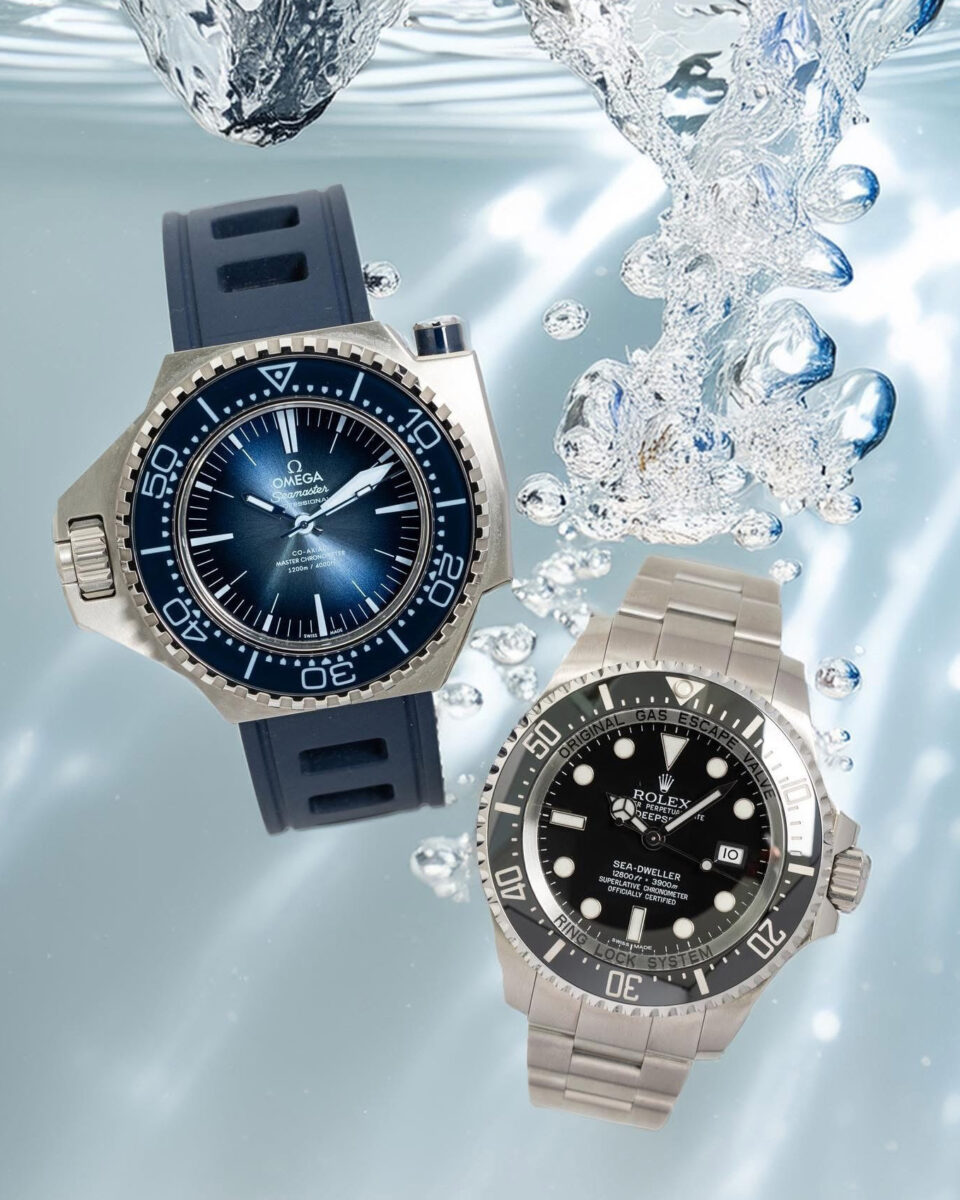
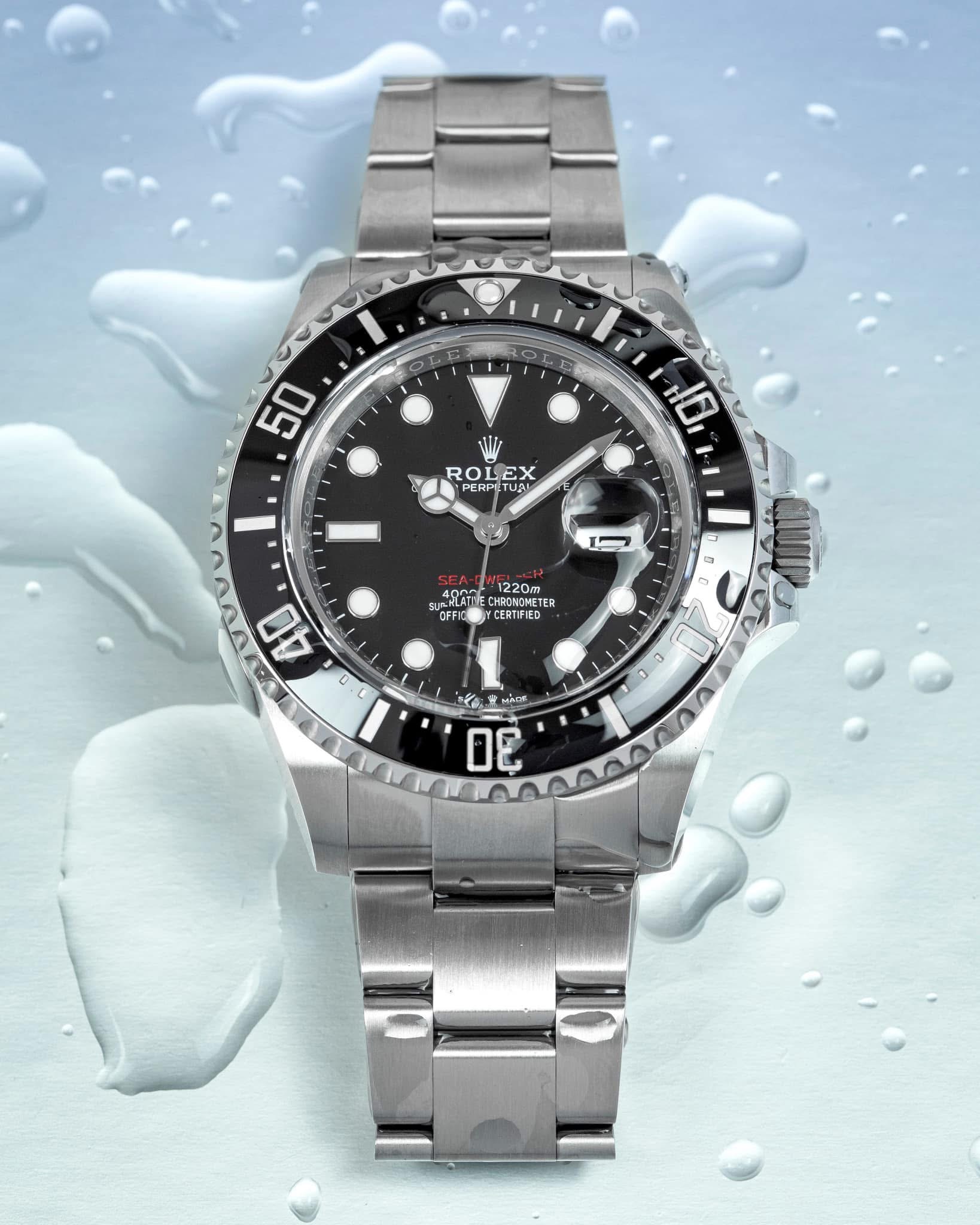
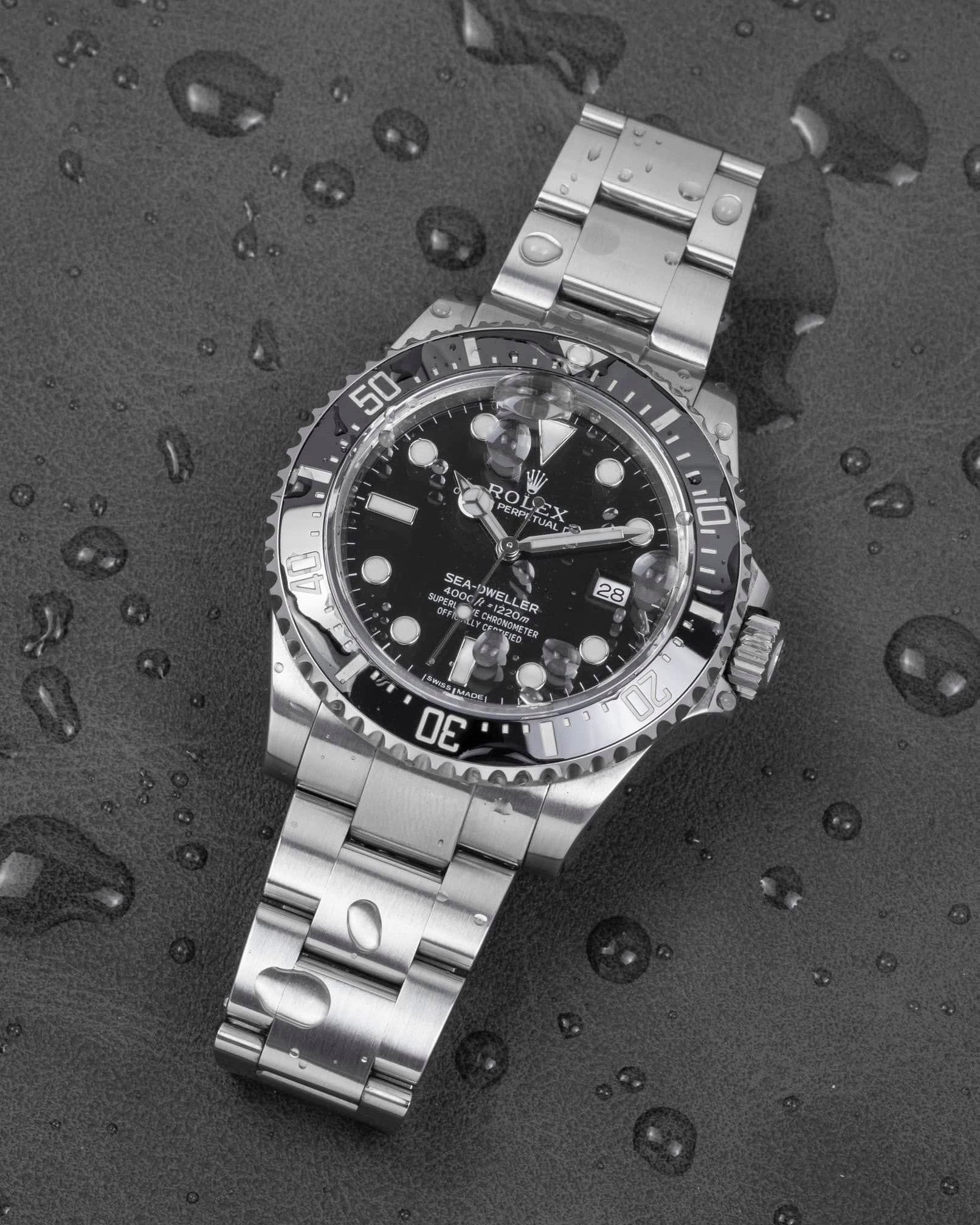
| 600m+ | Professional dive watches | Omega Planet Ocean (600m), Rolex Sea-Dweller (1,220m), Rolex Deepsea (3,900m) |
While these ratings provide a useful guide, there are several important points worth remembering.
30 metres
A 30m-rated watch is best thought of as splash resistant rather than swim proof.
It’s perfectly suitable for rain, washing your hands or being caught in a shower while outdoors, but we would never recommend intentionally submerging one. Most dress watches fall into this category because they’re designed to be slim and elegant rather than robust sporting tools.
Popular luxury watches with this depth rating – typically designed as dress watches and best kept away from prolonged water exposure;
- Cartier Tank
- Jaeger-LeCoultre Reverso
- Patek Philippe Calatrava (many references)
- Vacheron Constantin Patrimony
- A. Lange & Söhne Saxonia (many references)
50 metres
This is perhaps the most misunderstood water resistance rating.
Many manufacturers state that 50m is suitable for surface swimming, and technically that may be true for a brand-new watch in perfect condition.
However, at Bramlys we generally recommend avoiding swimming with a 50m watch, particularly if it’s older or pre-owned. The relatively modest safety margin, combined with ageing seals and unknown service history, simply introduces unnecessary risk.
The Omega Speedmaster Professional is an excellent example.
Although it’s officially rated to 50 metres, many owners choose not to expose these iconic chronographs to water. The presence of chronograph pushers, together with the value and collectability of many Speedmasters, means a cautious approach is usually the sensible one. If a Speedmaster has recently been pressure tested and is in excellent condition it may technically be suitable for surface swimming, but many enthusiasts still prefer to keep it dry.
Popular luxury watches with this depth rating – suitable for everyday life but, as a general rule, we recommend avoiding swimming;
- Rolex Cellini
- Omega Speedmaster Professional Moonwatch
- Cartier Ballon Bleu (many references)
- Patek Philippe Annual Calendar 5205
- Jaeger-LeCoultre Master Control (many references)
100 metres
For most people, 100m is where a watch becomes genuinely practical for everyday life.
Swimming, holidays, pool use and recreational snorkelling should all be perfectly manageable, assuming the watch is in good condition and its water resistance hasn’t deteriorated with age.
Many of Rolex’s most recognisable everyday models sit in this category, including the Datejust, Oyster Perpetual, Explorer and Explorer II.
Popular luxury watches with this depth rating – the sweet spot for an everyday luxury sports watch;
- Rolex Datejust
- Rolex Oyster Perpetual
- Rolex Explorer
- Rolex Explorer II
- Rolex Air-King
- Rolex Milgauss
- Rolex GMT-Master II
- Cartier Santos (current large models)
- Grand Seiko Evolution 9 (many references)
150 metres
A handful of manufacturers exceed the traditional 100m rating without producing dedicated dive watches.
The Omega Aqua Terra is a perfect example. With a 150m water resistance rating, screw-down crown and robust construction. Although only one of the major luxury brands regularly uses a 150m rating, the Aqua Terra is widely regarded as one of the most versatile sports watches available, equally comfortable in the office or on holiday.
200 metres
At this level you’re entering genuine dive watch territory.
Watches such as the Tudor Black Bay Fifty-Eight and TAG Heuer Aquaracer are designed with swimming, snorkelling and recreational diving firmly in mind, offering a substantial safety margin for almost any water-based activity most owners will ever undertake.
Popular luxury watches with this depth rating;
- Tudor Black Bay
- Tudor Black Bay Fifty-Eight
- Tudor Black Bay Chrono
- TAG Heuer Aquaracer
- Breitling Superocean
- Panerai Luminor Marina (many references)
- IWC Aquatimer
300 metres and beyond
This is where you’ll find many of the world’s most famous dive watches.
The Rolex Submariner, Omega Seamaster Diver 300M and Blancpain Fifty Fathoms all offer 300m water resistance and are purpose-built for underwater use.
Beyond that sit specialist professional dive watches such as the Omega Planet Ocean, Rolex Sea-Dweller and Rolex Deepsea, whose extraordinary depth ratings far exceed anything their owners are ever likely to encounter.
For most people, a 300m-rated watch is effectively capable of handling any realistic water activity.
- Rolex Submariner
- Omega Seamaster Diver 300M
- Blancpain Fifty Fathoms
- Breitling Superocean Heritage
- Tudor Pelagos 39
What actually keeps water out?
Water resistance isn’t achieved by the steel case alone.
Instead, a series of precision-engineered gaskets create watertight seals around the vulnerable entry points of the watch. These include:
- Crown gasket
- Case back gasket
- Crystal gasket
- Chronograph pusher seals (where fitted)
- Helium escape valve seals on professional dive watches
These small rubber or synthetic seals are responsible for preventing moisture entering the case, but like any consumable component, they age over time.
Why do some watches have screw-down crowns?
One of the biggest contributors to water resistance is the screw-down crown.
Unlike a conventional push-in crown, a screw-down crown threads into the watch case, compressing the crown gasket to create a much stronger seal.
This is why you’ll find screw-down crowns on watches such as the Rolex Submariner, Sea-Dweller, Deepsea and Omega Seamaster Diver 300M.
Dress watches often don’t require this level of protection because they’re simply not intended for prolonged water exposure.
The easiest way to let water into your watch
One of the most common causes of water damage has nothing to do with the depth rating at all.
It’s forgetting to screw the crown back down.
If your watch has a screw-down crown, always make absolutely certain it’s fully tightened before entering the water. Even being partially unscrewed can allow water to enter remarkably quickly.
Likewise, you should never:
- Pull the crown out while the watch is wet
- Adjust the time underwater
- Operate chronograph pushers underwater unless the manufacturer specifically states this is safe
Why water resistance can fail
Even if your watch left the factory capable of reaching impressive depths, its water resistance won’t remain perfect forever.
Several factors can reduce its effectiveness, including:
- Ageing gaskets
- Lack of regular servicing
- Heavy knocks or impacts
- Cracked or chipped crystals
- Previous poor-quality repairs
- Dirt around the crown
- Chlorine from swimming pools
- Salt water
- Cleaning chemicals, perfumes and sun cream
- Extreme temperature changes
A watch may still look immaculate externally while its seals have deteriorated significantly.
Should you shower wearing your watch?
Our advice is simple: don’t.
Hot water causes metal components and rubber seals to expand at different rates, while soaps, shampoos and shower gels can gradually degrade gasket materials.
Repeated exposure to heat followed by cooling also places unnecessary stress on the seals.
Even if your watch has a generous water resistance rating, taking it off before showering is a sensible habit.
Swimming in the sea
Salt water is considerably harsher than fresh water.
Salt crystals can build up around crowns, bezels and seals, while prolonged exposure encourages corrosion if left unchecked.
If you’ve been swimming in the sea, rinse your watch thoroughly with fresh water afterwards and dry it using a soft cloth. It’s a simple habit that can significantly prolong the life of the seals and external components.
Our advice at Bramlys
Every watch we sell undergoes a thorough inspection, and where appropriate our sports watches are pressure tested before being offered for sale.
However, regardless of the manufacturer’s stated rating, our advice is always based on common sense.
A modern Submariner that’s recently passed a pressure test is a very different proposition to a twenty-year-old dress watch that hasn’t seen new gaskets for a decade.
Likewise, while some 50m-rated watches may technically be capable of surface swimming, we’d much rather see customers err on the side of caution. Replacing a set of seals is inexpensive; repairing a water-damaged movement rarely is.
The simple rule to remember
If you’re ever unsure, this quick guide won’t steer you far wrong:
- 30m: Rain and splashes only.
- 50m: Everyday wear, but we recommend avoiding swimming.
- 100m: Swimming and snorkelling are generally suitable.
- 150m: Excellent all-round sports watch territory.
- 200m: Recreational diving and almost all water sports.
- 300m+: Purpose-built dive watches capable of handling virtually any realistic water activity.
- Always check a screw-down crown is fully tightened before entering the water.
- Have your watch pressure tested periodically, especially before holidays or regular swimming.
Ultimately, a water resistance rating is only part of the story. The age of the watch, the condition of its seals, its service history and how it’s used all play an equally important role. Treat your watch with care, have it tested periodically and you’ll dramatically reduce the risk of water ending up where it should never be—inside the case.
Author: Bramlys