The Show That Runs the Watch World
From a humble 1917 trade fair in Basel to the glittering colossus of Watches & Wonders Geneva – the full, dramatic, politically-charged story of how the watch industry gets its annual moment in the sun.
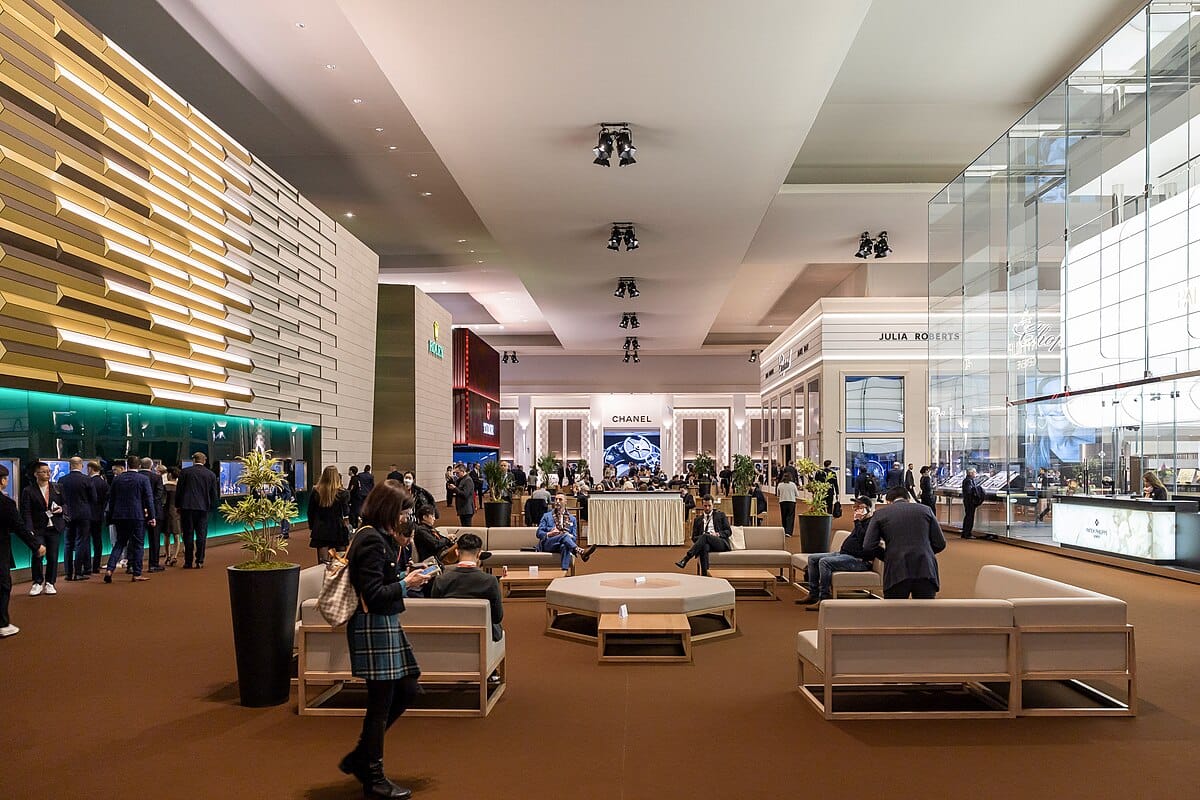
Every April, something remarkable happens in Geneva. The city — already one of Europe’s most quietly powerful – becomes the uncontested centre of the horological universe. Brand CEOs fly in from Tokyo, New York and Milan. Journalists camp out at Palexpo, the enormous convention hall that sits, almost symbolically, right beside the international airport. Collectors with years-long waitlists for their dream pieces jostle for invitations. And somewhere in all of this, a Rolex engineer, a Patek Philippe master craftsman and an independent micro-brand founder from Copenhagen are all standing in the same room, talking about gears.
This is Watches & Wonders Geneva. And if you care about watches – even a little – it matters more than you might realise.
But understanding why it matters today means understanding what came before it: a century of trade fairs, industry politics, corporate egos and one spectacular implosion that reshuffled the entire deck.
Basel, 1917: Where It All Began
The story of the world’s great watch fair doesn’t start in Geneva at all. It starts in Basel — Switzerland’s third city, a town whose identity has always been shaped not by watchmaking, but by something rather more mundane: trade.
Basel had been hosting merchants and market fairs since the Middle Ages, its position at the convergence of Switzerland, Germany and France making it a natural crossroads for commerce. The city held its first official fair as far back as 1471, granted by Emperor Frederick III — a town perfectly placed on the Rhine for merchants hauling goods across Europe. By the early twentieth century, Basel was the undisputed home of Swiss exhibition culture.
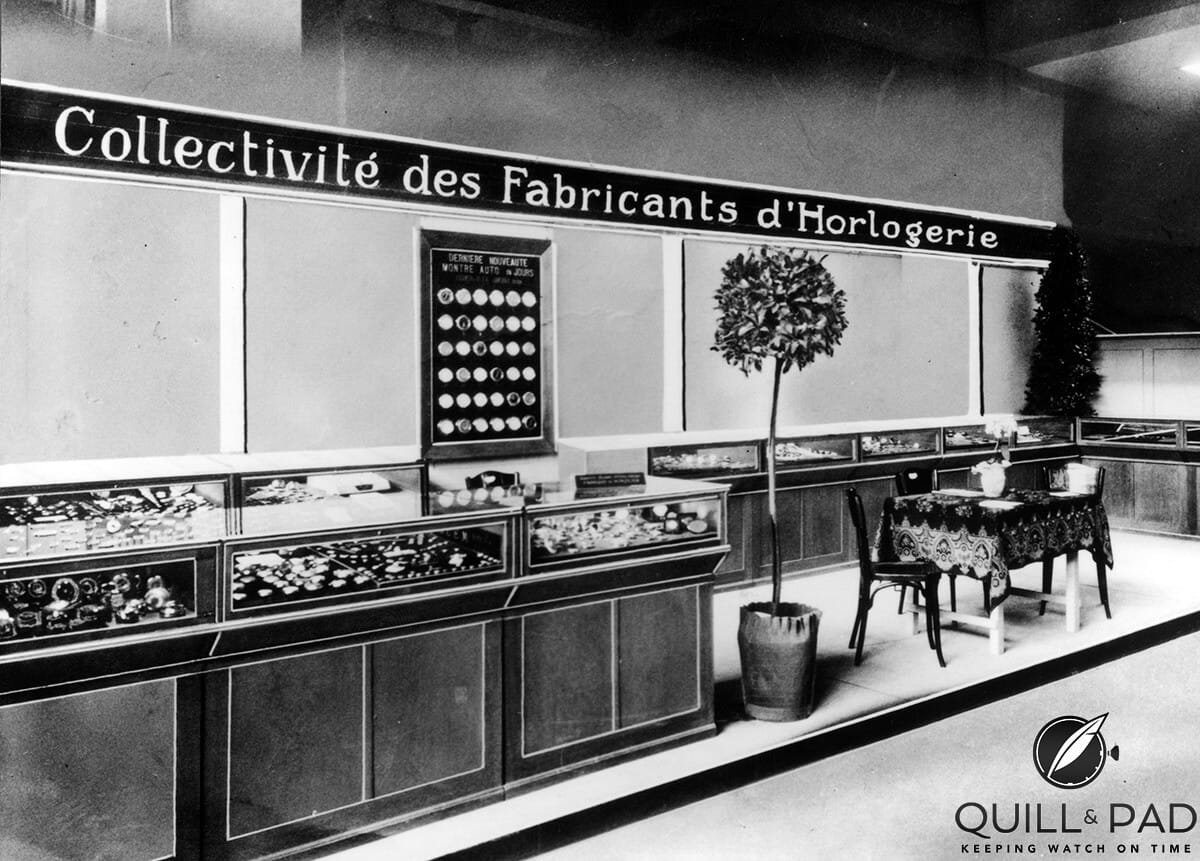
And so in 1917, as Europe was still at war, the Schweizer Mustermesse – the Swiss Sample Fair – incorporated watches and jewellery into its programme. It was modest by any standard. But it was a beginning. From 1917 on, it wasn’t just about bringing goods for sale, but about showing product samples and taking orders from retailers. The logic was simple and elegant: rather than manufacturers travelling individually to customers scattered across the continent, everyone gathered in one place, once a year and did business together. It was efficient. It was Swiss.
The fair grew steadily through the following decades, picking up names along the way – Mustermesse Basel, then the European Watch and Jewelry Show, then simply Basel. By 2003, it had been rebranded Baselworld, a name that would become synonymous with the global watch calendar for a generation.
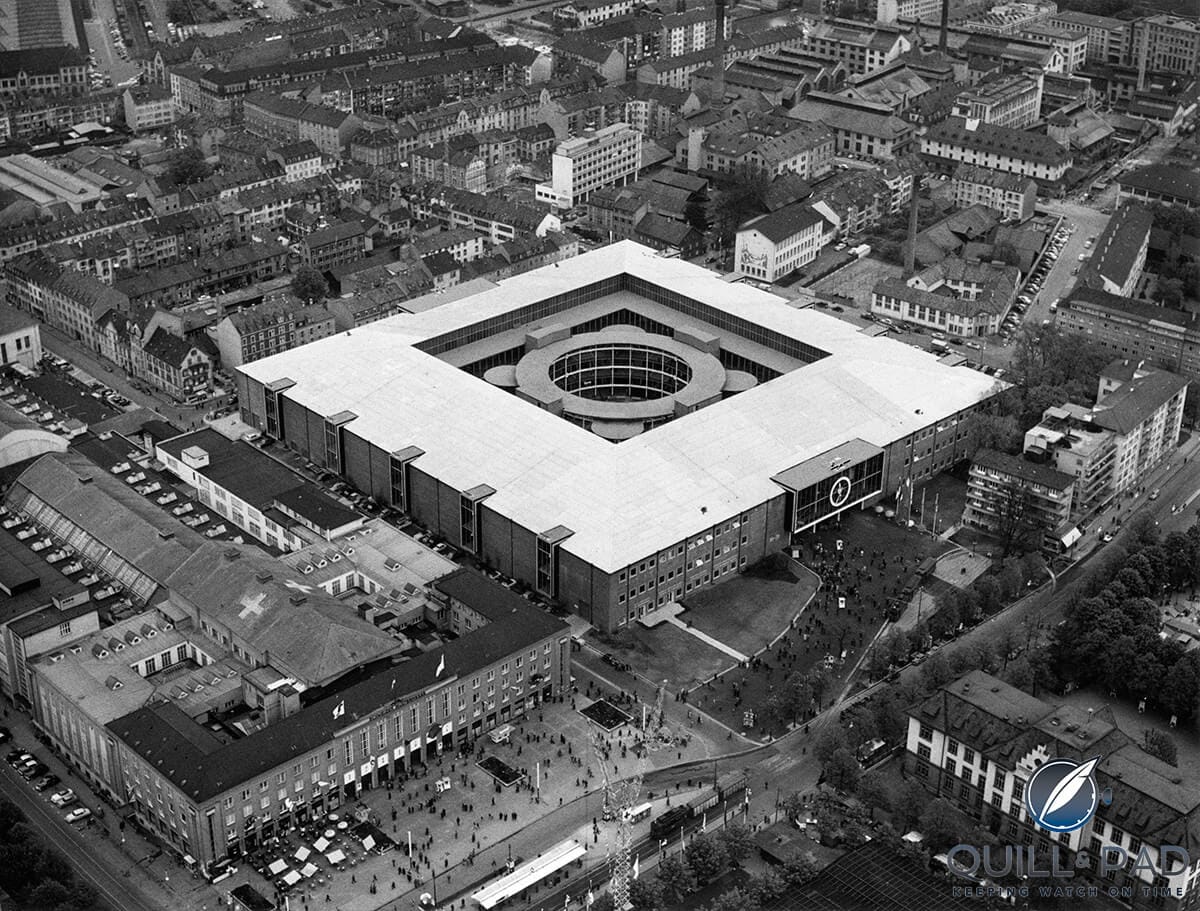
At its peak, Baselworld was staggering. The 2013 edition hosted around 1,815 exhibiting brands. To give you a sense of the scale: that’s not 1,815 luxury watch brands – that’s 1,815 companies spanning the full spectrum, from ultra-prestige Swiss ateliers down to jewellery component suppliers, strap manufacturers and specialist machinery makers. It was a complete ecosystem, sprawled across an enormous exhibition complex in the heart of Basel and for one week every spring, it was the place to be. Hotels booked out months in advance. Restaurants tripled their prices. The city buzzed.
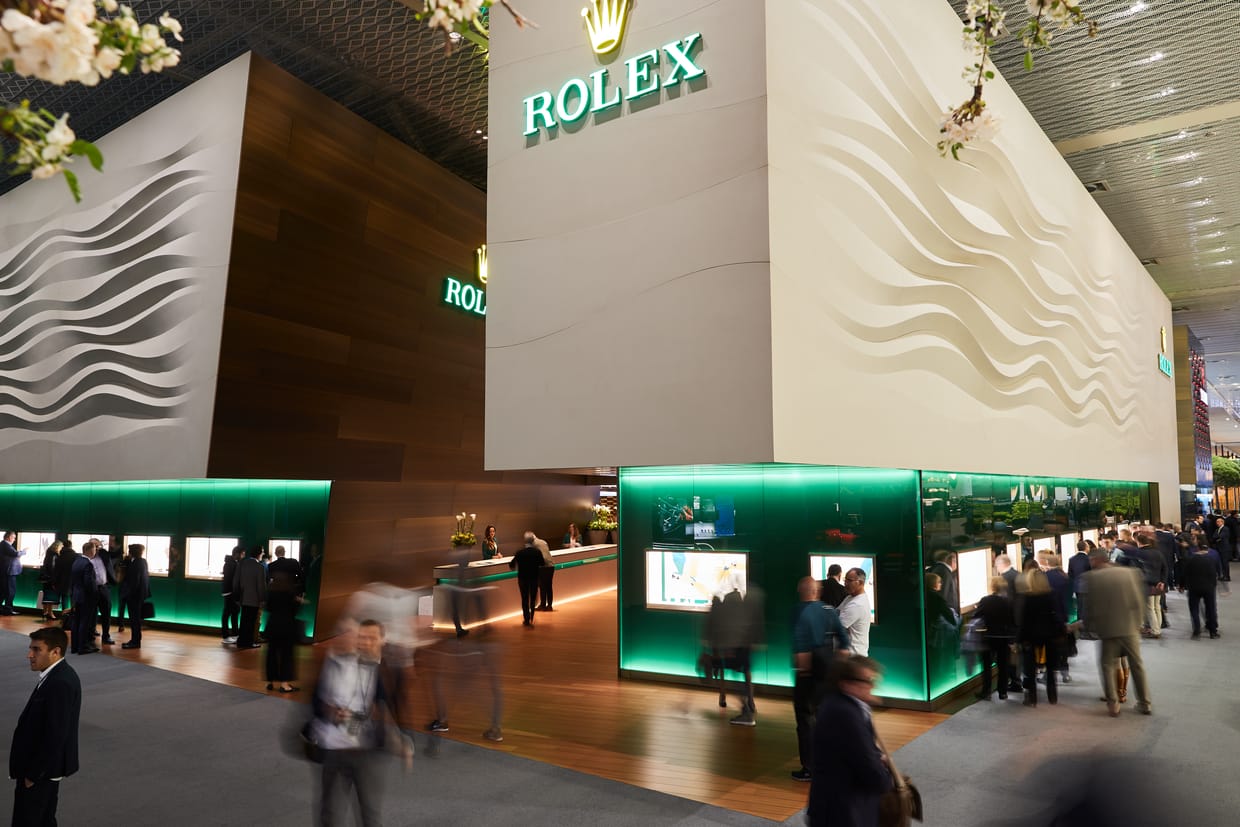
For the watch brands that mattered most — Rolex, Patek Philippe, Omega, Breitling, TAG Heuer – Baselworld was simply the annual moment of truth. New models were unveiled here. Deals were struck here. Relationships between brands and retailers that might sustain businesses for decades were forged on the floor of the Messe Basel.
BASELWORLD AT ITS PEAK
🕐 Founded: 1917 (as Swiss Sample Fair)
📍 Location: Messe Basel, Basel, Switzerland
🏭 Peak exhibitors: ~1,815 brands (2013)
💰 Estimated Swatch Group annual spend: CHF 50 million+
🏗️ MCH Group’s new exhibition hall: CHF 430 million investment
Geneva’s Quiet Counter-Revolution
Meanwhile, another story was unfolding about 270 kilometres to the south-west.
Geneva had always had its own relationship with horology. The city’s watchmaking heritage stretches back to the sixteenth century, when Calvinist religious reformers — who banned the wearing of jewellery — inadvertently redirected the talents of the city’s goldsmiths towards the making of watches, which could be justified as functional tools rather than mere adornment. It is one of history’s more charming ironies that puritanical religion gave birth to one of luxury’s most enduring art forms.
By the early 1990s, a group of high-end brands – many of them owned by the Richemont Group, the luxury conglomerate behind Cartier, IWC, Vacheron Constantin, Piaget and Jaeger-LeCoultre – felt that Baselworld, for all its scale, wasn’t quite the right environment for them. The Basel fair was many things, but it was not refined. It was enormous, chaotic and shared. The kind of event where the world’s most precious mechanical objects were displayed alongside watch strap hardware and clock components.
So in 1991, Richemont quietly established a different kind of event entirely. The Salon International de la Haute Horlogerie — SIHH — dates back to 1991 and was held at Palexpo in Geneva. It was smaller, more intimate, invite-only. You couldn’t just buy a ticket to SIHH. You were either in the industry, a journalist, or a VIP client — or you weren’t getting in. Richemont brands were the core, but over time the event welcomed other prestigious houses: Audemars Piguet, Richard Mille.
For years, the two shows coexisted – Basel as the industry’s massive, democratic bazaar; Geneva as its exclusive, hushed salon. Brands generally chose one or the other based on their position in the market. Rolex and Patek Philippe only exhibited at Baselworld, while Audemars Piguet was exclusive to SIHH. The two shows were rivals, but they’d settled into a comfortable duopoly that more or less served the industry.
Then, gradually, things started to crack.
“The downfall of Baselworld should be examined as a case study at business schools around the world. It’s a textbook example of arrogantly overplaying your leverage.” LUXURY BAZAAR, 2026
The Slow Collapse of an Empire
The problems at Baselworld weren’t sudden. They accumulated, slowly and then all at once, over several years.
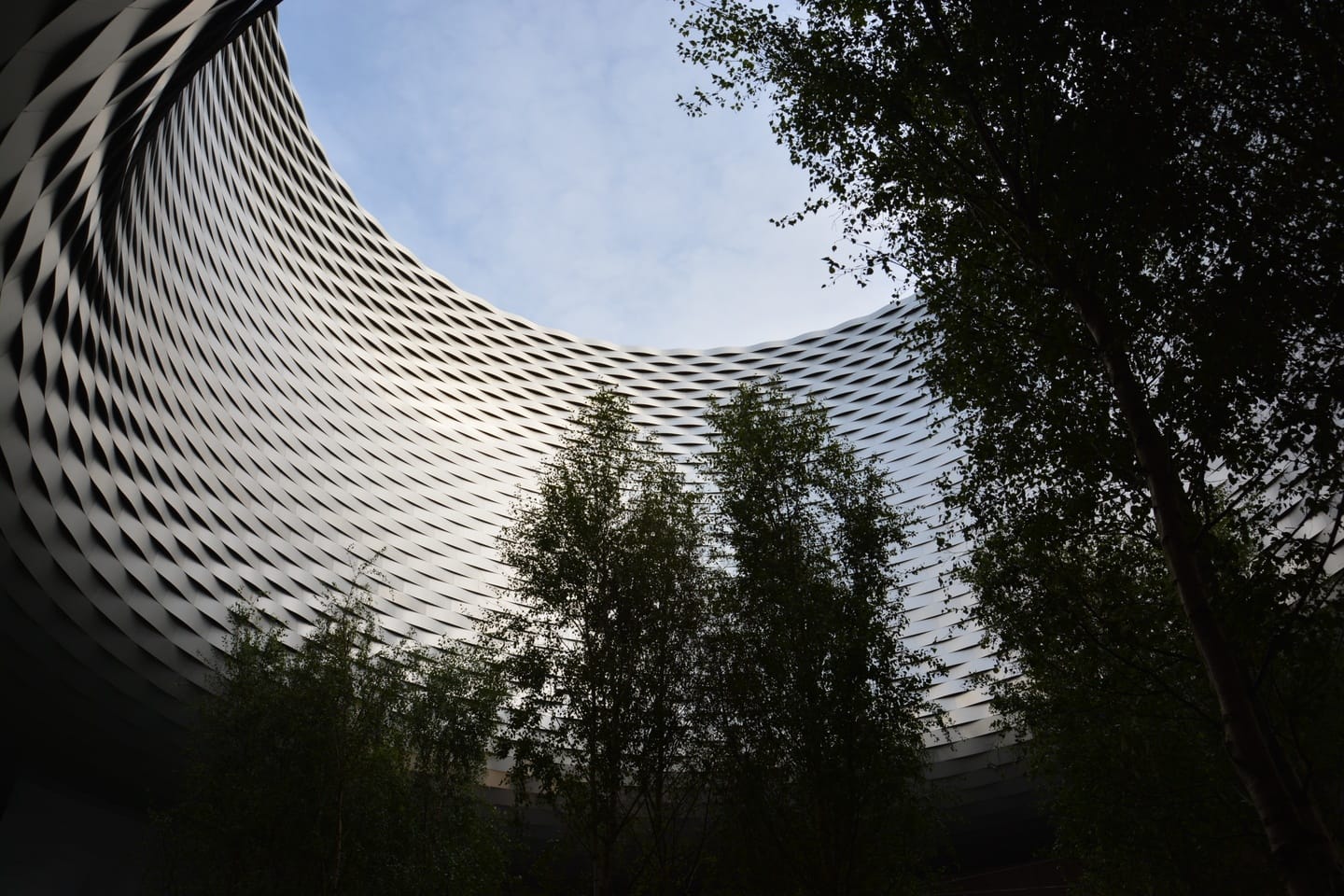
The first issue was cost. MCH Group, the organisation that ran Baselworld, had made a monumental bet on the future of physical trade fairs: a new building developed by star architects Herzog & de Meuron, with an overall investment of CHF 430 million – the biggest investment ever made in Switzerland’s exhibition industry. It was spectacular. It was also, in the view of many brands, spectacularly expensive to exhibit in. The fair had to face several management crises and critics from most brands found the running costs too high. Smaller brands were being priced out. Larger ones were questioning the return on investment. Even food and drinks at the atrium came with a huge premium.
The second issue was management. Baselworld’s organisers seemed, to many observers, to be running the show as though the digital revolution hadn’t happened and the industry’s structure would never change. The fair had increasingly been driven by something akin to Soviet-style practices, with staff that seemed blind to its gradual erosion, engulfed in a monopolistic state of mind inherited from the past. There were complaints about a lack of flexibility, a failure to engage with brands’ evolving needs and an inability to read the room.
And then, in the summer of 2018, the first domino fell.
The Swatch Group left Baselworld after the 2018 edition, taking its long list of brands with it, including Longines, Omega and Tissot. To understand the significance of this, you need to know that Swatch Group was Baselworld’s single largest exhibitor. Swatch Group would invest up to $50 million USD to be at Baselworld with its 18 brands. That’s fifty million dollars. Gone.
Nick Hayek, the CEO of Swatch Group, wasn’t shy about his reasons. In an interview, he explained that “the MCH Group is too busy optimising and amortising its new building, instead of being brave enough to bring real changes.” He was blunt, damning and – as events would prove – entirely correct.
Just days after the Swatch Group’s shock exit from Baselworld, René Kamm, chief executive of MCH Group, resigned, ending a career of nearly 20 years. The ship was clearly taking on water.
Still, Baselworld limped on. Rolex was still there. Patek Philippe was still there. Without them, industry insiders agreed, the show could not survive. With them, there was still a reason to come.
Then COVID-19 arrived.
The Final Straw
The pandemic forced Baselworld 2020 to be postponed. This, in itself, was unavoidable and understandable. What was not understandable – to the brands – was how MCH handled it.
Rolex, Patek Philippe, Chanel, Chopard and Tudor announced their departure following a number of unilateral decisions made without consultation by Baselworld management, including the postponement of the show until January 2021, as well as its inability to meet the brands’ needs and expectations.
Jean-Frédéric Dufour, CEO of Rolex, issued a statement that was both dignified and devastating: “We have taken part in Baselworld since 1939. Unfortunately, given the way the event has evolved and the recent decisions made by MCH Group and in spite of the great attachment we had to this watch show, we have decided to withdraw.”
Patek Philippe’s president Thierry Stern was equally direct: “Today Patek Philippe is not in line with Baselworld’s vision anymore. There have been too many discussions and unsolved problems; trust is no longer present.”
When Rolex and Patek Philippe – two of the most powerful and traditional names in Swiss watchmaking — simultaneously walked out of an event one of them had attended since 1939, the message was unambiguous. As one retailer put it plainly at the time: “Without Rolex and Patek Philippe, there is no Baselworld.”
They were right. Baselworld, as it had existed for over a century, was finished.
WHAT COMES NEXT
Geneva Ascendant: The Birth of Watches & Wonders
The brands leaving Basel didn’t leave the industry without a plan. By 2020, Rolex, Patek Philippe, Tudor, Chopard and Chanel announced they were leaving Baselworld – not just leaving, but starting something new.
Alongside the Fondation de la Haute Horlogerie (FHH), they helped reformat and relaunch what was formerly SIHH into a broader, more inclusive event: Watches & Wonders Geneva. What had previously been a closed, Richemont-dominated affair would now become the industry’s new shared home.
The name was important. “Watches & Wonders” had actually existed before as a multi-city travelling show, exhibiting in places like Hong Kong and Miami from 2013 to 2019. But grafting that name onto what was essentially an expanded, democratised SIHH gave the new Geneva event both heritage and fresh energy. It signalled a break from the old order.
And then in September 2022, the Watches and Wonders Geneva Foundation (WWGF) was established as a non-profit foundation, founded at the initiative of Rolex, Richemont and Patek Philippe. This was the governance structure that would run the show going forward – not a commercial exhibition company, but a foundation with a mission to promote watchmaking culture. In 2024, three new members joined the board: Chanel, Hermès and LVMH. The industry’s major houses were now, effectively, co-owners of their own showcase.
The contrast with Baselworld’s approach – a commercial organiser treating brands as tenants, setting rents and rules – could not have been more stark. This was the industry taking control of its own narrative.
“Where SIHH had once been a closed-door, invite-only event, Watches & Wonders became the new platform for both legacy and independent names to show their work under one roof.” THE 1916 COMPANY
The Politics of Who Shows Up (and Who Doesn’t)
No discussion of Watches & Wonders is complete without confronting the elephant in the room: who’s missing.
The most glaring absence is the Swatch Group. Omega. Longines. Breguet. Blancpain. Tissot. These are not peripheral brands — they are among the most recognisable names in watchmaking. And they are not at Watches & Wonders. When Swatch Group left Baselworld, CEO Nick Hayek made it clear that his vision for the future was radically different from a centralised trade fair. The group developed its own alternative – “Time to Move” – a travelling, immersive format that brought the brands directly to consumers in different cities. Hayek told CNBC: “When you look at these old traditional watch fairs, it doesn’t make any sense anymore. We might do something much more creative with other people and other partners.”
Their absence from Watches & Wonders is therefore a deliberate strategic choice, not a snub. But it does mean the show has a significant gap.
Then there’s Audemars Piguet – makers of the Royal Oak, arguably the most culturally influential watch of the past half century. AP left SIHH after 2019, citing cost, lack of public access and a shift to a direct-to-consumer retail model. For years they operated independently, staging their own events and releases on their own schedule. The watch world watched with interest.
But in 2026, something significant happened: Audemars Piguet joined Watches & Wonders after leaving all watch fairs in 2019 to announce releases independently. Their return is genuinely exciting. For the first time, watch enthusiasts can now see new releases from Patek Philippe, Rolex and Audemars Piguet — the three most coveted names in high watchmaking – all in one week, in one city. That’s a genuinely historic convergence.
Breitling has also chosen to chart its own course, staging its own “Summit” events. Richard Mille and F.P. Journe remain outside the Geneva tent. Each of these decisions reflects the broader industry tension between the efficiency of a centralised showcase and the control a brand gains by owning its own moment.
NOTABLE BRAND POSITIONS — 2026
✅ Present at W&W: Rolex, Patek Philippe, Cartier, IWC, Vacheron Constantin, Jaeger-LeCoultre, Panerai, Chopard, Chanel, Tudor, Hermès, BVLGARI, A. Lange & Söhne, Audemars Piguet (new 2026)
❌ Absent: Omega, Longines, Breguet, Blancpain (all Swatch Group); Breitling; Richard Mille; F.P. Journe; Girard-Perregaux
From Trade Show to Cultural Event
One of the most interesting transformations in the Watches & Wonders era is how the show has evolved beyond a pure trade fair into something richer and more culturally ambitious.
The old Baselworld was primarily a business event – brands selling to retailers, retailers planning their stock. The public could attend, but it was never really for them. SIHH was even more exclusive: a sealed world of industry insiders and VIP clients. The SIHH was strictly for dealers and the press until 2017, when the salon opened to the public on certain days.
Watches & Wonders has consciously broken from this tradition. In 2020 and 2021, the show was opened to the public for the first time in a virtual format. In 2022, three days of the event were made accessible to the public in person. The 2026 edition goes further still: the fair runs from April 14 to 20, with the first four days for journalists and industry members and April 18–20 open to the general public.
Beyond Palexpo, the event has spilled into the city itself. A new extension called “In the City” brings watchmaking into the heart of Geneva, with attendees able to explore new releases, attend private viewings and experience hands-on demonstrations of fine watchmaking along the Rhone River at the foot of the Old Town.
There’s also a deliberate effort to reach younger audiences. New programmes include a special focus on youth and emerging talent – young watchmakers, apprentices and recent graduates — showcasing the next generation of craftsmanship. And a dedicated “Carré des Horlogers” section spotlights independent watchmakers whose experimental, handcrafted work sits alongside the marketing might of the grande maisons.
The show has also gone global. The WWGF brought its flagship event to Shanghai in 2020, 2021, 2023 and 2024, hosted at the West Bund Art Center, with 70% of public tickets sold to visitors under 35. The luxury watch industry is acutely aware that its future collectors are overwhelmingly young and increasingly Asian. Watches & Wonders Geneva is learning to travel.
Why It Still Matters – Perhaps More Than Ever
In an age when brands can drop a new watch on Instagram at 9am and have it trending globally by lunchtime, you might reasonably ask: why does a physical trade fair still matter? Why fly to Geneva, queue for a booth and strain to see a dial through a glass cabinet when you could be watching a beautifully produced YouTube unveiling from your sofa?
The answer is layered. For journalists and press, Watches & Wonders is irreplaceable not just because it concentrates the year’s news into a single week, but because it provides access – to movements, to makers, to the texture and weight and finishing of a watch that no photograph can convey. A watch is a physical object; understanding it properly requires holding it.
For retailers and dealers, it remains the moment when they encounter the new season’s entire portfolio in person, negotiate allocations and plan their businesses for the year ahead. It is, at its core, still the function it was designed for in 1917.
For collectors and enthusiasts, Watches & Wonders is increasingly something else entirely: a pilgrimage. A chance to be in the same room as the objects of their passion, surrounded by thousands of people who share that passion, in the city that watchmaking built. Many watch lovers describe the chance to see so many watches and meet other watch enthusiasts as genuinely exciting.
And for the industry itself, the show serves a function that no individual brand campaign can replicate: it projects the collective prestige of Swiss watchmaking as a cultural category. When Watches & Wonders is on, every major newspaper’s style section covers it. Business reporters write about the watch market. Luxury analysts issue forecasts. The entire industry gets a week in the spotlight, unified.
That is, ultimately, what no Instagram drop can buy.
A CENTURY OF WATCH FAIRS – KEY MOMENTS
1917
The Basel Watch Fair is Born
Watches and jewellery incorporated into the Swiss Sample Fair in Basel. An industry tradition begins.
1991
SIHH Launches in Geneva
Richemont establishes the Salon International de la Haute Horlogerie – exclusive, invite-only, a direct rival to Basel.
2003
Baselworld Rebrands
The Basel fair officially becomes “Baselworld” – a name that will define the industry’s calendar for two decades.
2013
Peak Baselworld
Around 1,815 exhibiting brands. MCH Group’s CHF 430 million exhibition hall opens. The empire is at its zenith.
2018
Swatch Group Walks Out
Nick Hayek pulls all 18 Swatch Group brands – including Omega – from Baselworld. MCH’s CEO resigns days later. The dominoes begin to fall.
2020
Rolex, Patek Philippe & Friends Leave
Citing MCH’s mishandling of the pandemic postponement, Rolex, Patek Philippe, Chanel, Chopard and Tudor announce their departure for Geneva. Baselworld never recovers.
2020
SIHH Becomes Watches & Wonders
The Geneva show is relaunched under its new name, initially in digital-only format. A new era begins.
2022
WWGF Founded
Rolex, Richemont and Patek Philippe establish the Watches and Wonders Geneva Foundation as a non-profit, cementing the show’s long-term future.
2026
The Biggest Show Yet
65 brands including Audemars Piguet (returning to a trade fair for the first time since 2019). The industry’s three most coveted names – Rolex, Patek Philippe, AP – in the same city for the first time.
So Where Does It Go From Here?
Watches & Wonders is, by almost any measure, a success. The 2025 edition welcomed 55,000 visitors, including nearly 1,600 journalists. The 2026 edition brings together 65 brands – the most in the show’s history. Public access has been expanded. The Geneva city itself has become a partner in the festivities, turning the show week into a kind of horological carnival.
There are, inevitably, questions. The Swatch Group gap remains – and it’s a significant one. Without Omega, the world’s best-known luxury watch brand and without Longines, one of its best-loved heritage names, Watches & Wonders cannot claim to be a truly comprehensive picture of Swiss watchmaking. Whether Nick Hayek’s successors at Swatch Group will eventually see the value in joining is one of the industry’s great open questions.
There are also questions about whether Watches & Wonders risks becoming Baselworld 2.0 – growing so large, so expensive and so establishment-oriented that it recreates the very problems that destroyed its predecessor. It’s a fair concern and one that the show’s organisers would do well to keep front of mind.
And yet. There is something enduring about the idea of gathering, once a year, in the city that invented fine watchmaking, to marvel at what human beings can do with a handful of gears, a spring and four centuries of accumulated knowledge. The watch trade fair, in some form, has existed since 1917. It has survived world wars, economic crises, digital disruption and a global pandemic.
It has survived, ultimately, because the desire to gather around beautiful objects and talk about them is not a trade fair phenomenon. It’s a human one.
Watches & Wonders Geneva runs this April. The horological world will be watching.
Author: Bramlys