Should You Polish a Watch? Weighing up the Pros, Cons and Common Misconceptions
Few topics divide watch collectors quite like polishing.
For some, it’s a four-letter word – synonymous with lost value, softened edges and irreversible damage. For others, it’s simply part of responsible ownership, helping a watch age gracefully rather than look prematurely tired.
As with most things in watch collecting, the truth sits comfortably between the extremes.
Polishing isn’t inherently good or bad. What matters is how, when and why it’s done – and whether the watch retains its original structure and character as a result.
Why Polishing Became So Controversial
Much of the fear around polishing comes from examples where it’s been done badly.
Over-polishing can:
- Round off sharp case edges
- Thin lugs and soften bevels
- Alter proportions and symmetry
- Permanently change how a watch wears
Once metal is removed, it’s gone forever. And on certain references – particularly vintage sports models from brands like Rolex – case geometry plays a huge role in desirability.
These cautionary tales are valid. But they’ve also led to an overly rigid narrative: that any polishing is automatically harmful. That simply isn’t true.
The Case for Leaving a Watch Unpolished
Let’s be clear – there are very good reasons not to polish a watch.
The Pros of Leaving It Unpolished
- Original case lines remain untouched
- Collectors value sharp, factory geometry
- Patina tells a genuine story of wear
- Particularly important for rare or early references
For high-level collectors building reference-correct collections, originality is often the priority. Scratches, scuffs, and wear marks are seen as evidence of life rather than flaws.
In those cases, polishing may genuinely be the wrong choice.
The Argument for Polishing — When Done Properly
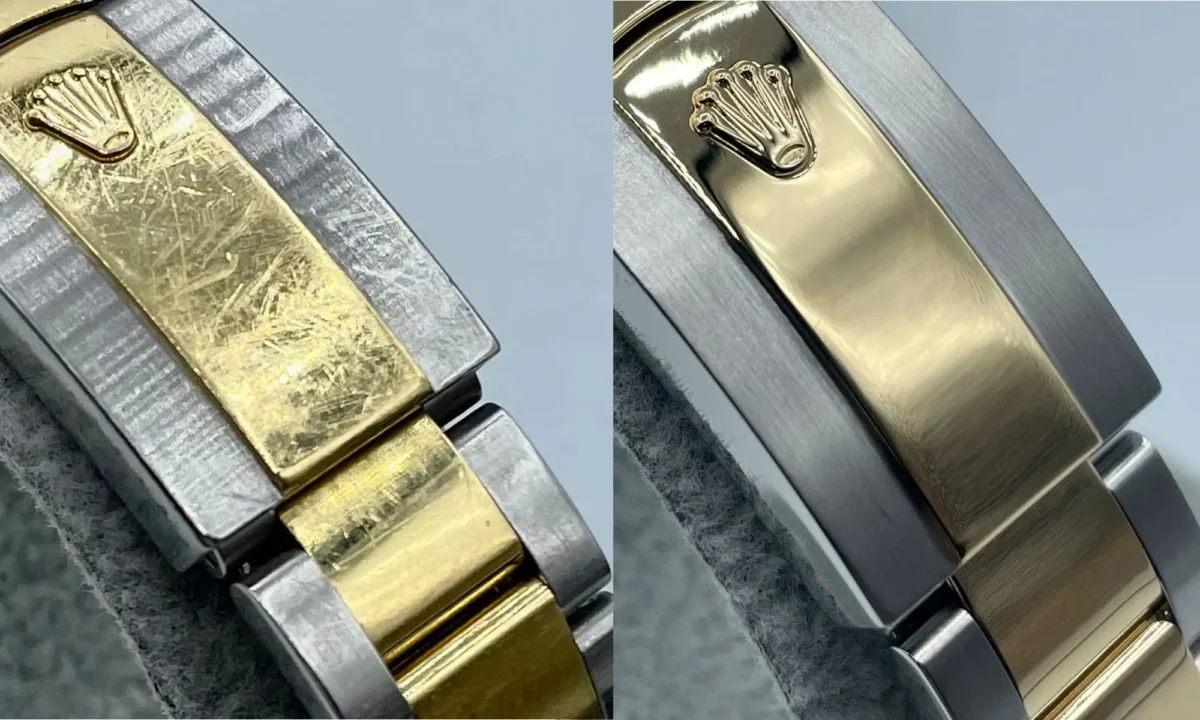
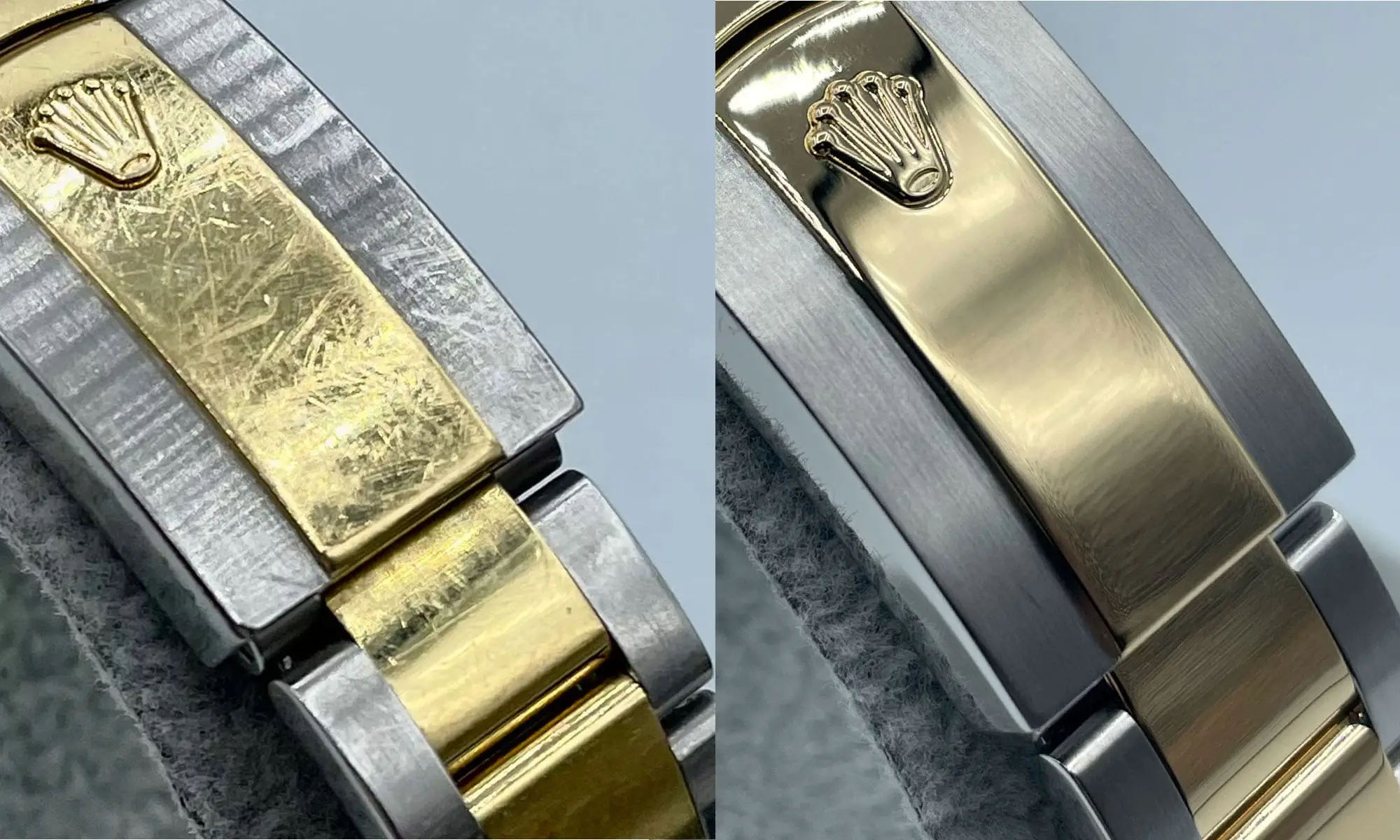
Where the conversation becomes more interesting is when we talk about sympathetic polishing.
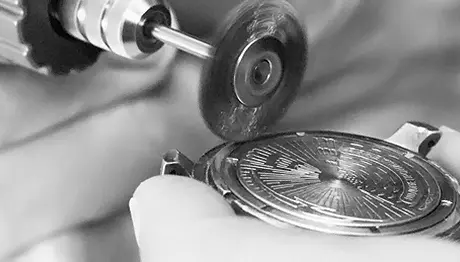
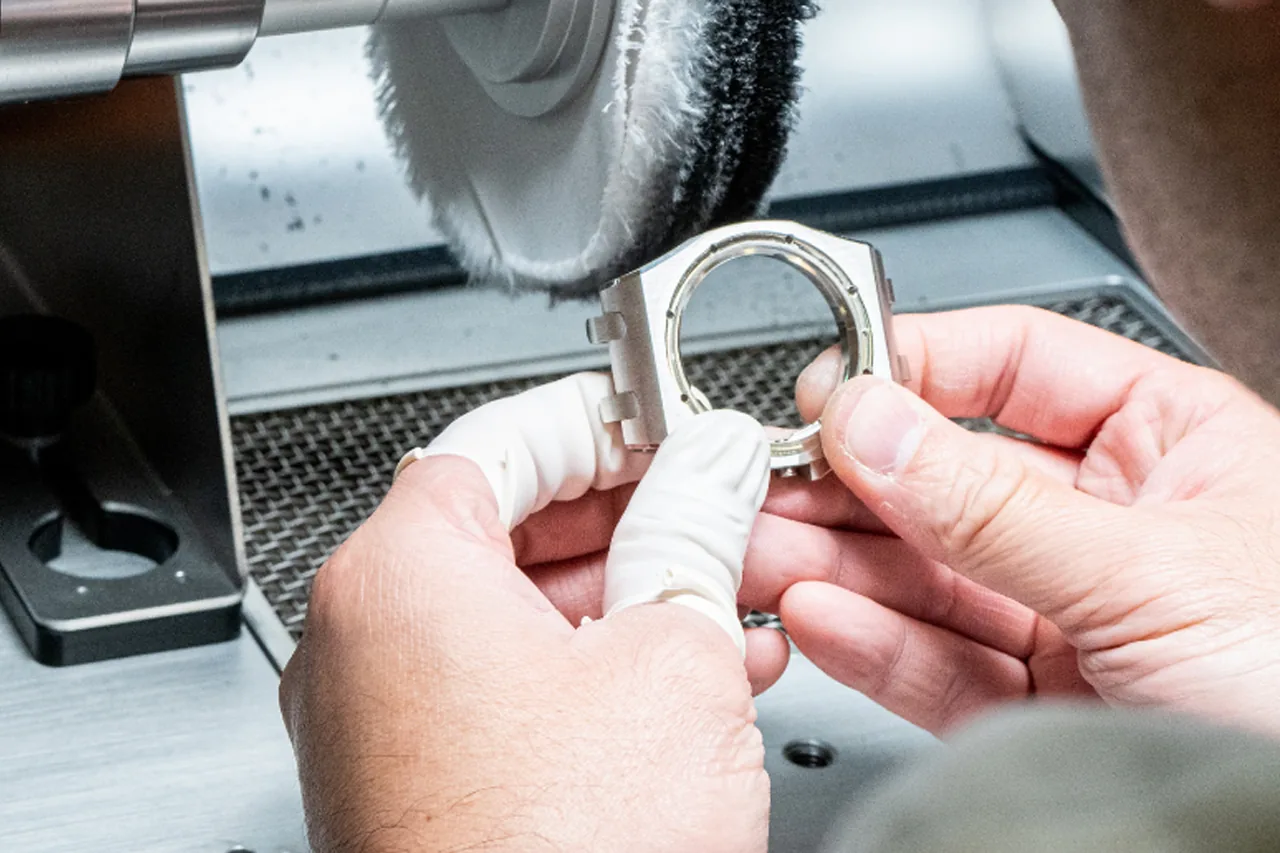
A light, professional polish – carried out by a skilled watchmaker who understands the case design – can:
- Remove distracting surface scratches
- Restore visual balance and symmetry
- Improve how the watch looks on the wrist
- Make a watch feel cared for rather than neglected
Importantly, this kind of polishing does not aim to make a watch look new. It aims to make it look well maintained.
When done correctly, the watch should still:
- Retain original case proportions
- Preserve lug thickness and definition
- Maintain bevels and brushing where intended
- Look period-correct, not over-refinished
At that point, the watch hasn’t lost its integrity — it’s simply been refreshed.
Structural Integrity Is the Line That Matters
This is where Bramlys firmly sits on the subject.
The issue isn’t polishing itself.
The issue is loss of structural integrity.
If a case:
- Still has strong, even lugs
- Shows clear transitions between polished and brushed surfaces
- Retains its original shape and stance on the wrist
Then it hasn’t been compromised.
A watch can be polished and honest.
A watch can be worn and correct.
These things are not mutually exclusive.
Wearability vs Preservation
Another often overlooked factor is how the watch is actually going to be used.
A watch worn regularly will pick up marks – that’s unavoidable. For many owners, allowing light polishing at sensible intervals helps strike a balance between:
- Enjoying the watch
- Keeping it presentable
- Avoiding excessive wear over time
Ironically, refusing any polishing at all can sometimes accelerate visual deterioration, especially if deep scratches are left to worsen or catch light awkwardly.
For daily wearers, a well-judged polish every so often can be part of sensible stewardship.
Market Reality: Buyers Are More Nuanced Than Ever
The market has matured.
While untouched examples still command premiums, many buyers today are:
- Comfortable with previously polished cases
- More concerned with transparency than absolutes
- Focused on condition relative to age
A sympathetically polished watch, accurately described, will often be more appealing than a heavily worn example with no context.
Honesty, as ever, is what underpins value.
Our View at Bramlys
At Bramlys, we don’t operate in black and white.
We believe:
- Polishing should never be aggressive or routine
- It should only be done by experienced professionals
- It must respect the original design and structure
- Any polishing should be disclosed clearly
A well-maintained watch that has lived a life – and been cared for along the way – is not something to apologise for.
Polishing isn’t about erasing history.
It’s about preserving a watch so it can continue to be enjoyed.
Final Thoughts
Should you polish a watch?
The answer isn’t yes or no – it’s it depends.
If polishing compromises structure, originality, or proportion, it should be avoided.
If it’s light, informed, and sympathetic – and the watch retains its integrity – it can be entirely appropriate.
The goal isn’t perfection.
It’s longevity, honesty, and enjoyment.
And ultimately, the best watches aren’t the ones that never lived – they’re the ones that were cared for properly while they did.
Author: Bramlys